.

.
Showing posts with label Northlands. Show all posts

Thursday, August 25, 2016

Our LAST trip to the Northlands

Of all the traveling we have done throughout New Zealand, the region we have loved the best in the Northlands.  We serve as Area Family History Advisers for Whangarei an Kaikohe Stakes, so we have had quite a few trips up that way for various trainings.   We've made some good friends and enjoyed the beauty of the area.   This week we had one last trip to make.   On our way up we stopped at Parry Kauri Park in Warkworth, a place we have been to many times.   Usually we just make it a quick pit stop and admire the two giant kauri trees that are very near the carpark to the museum.   This time, however, we took time to walk through the surrounding trail to appreciate the beauty of the place.
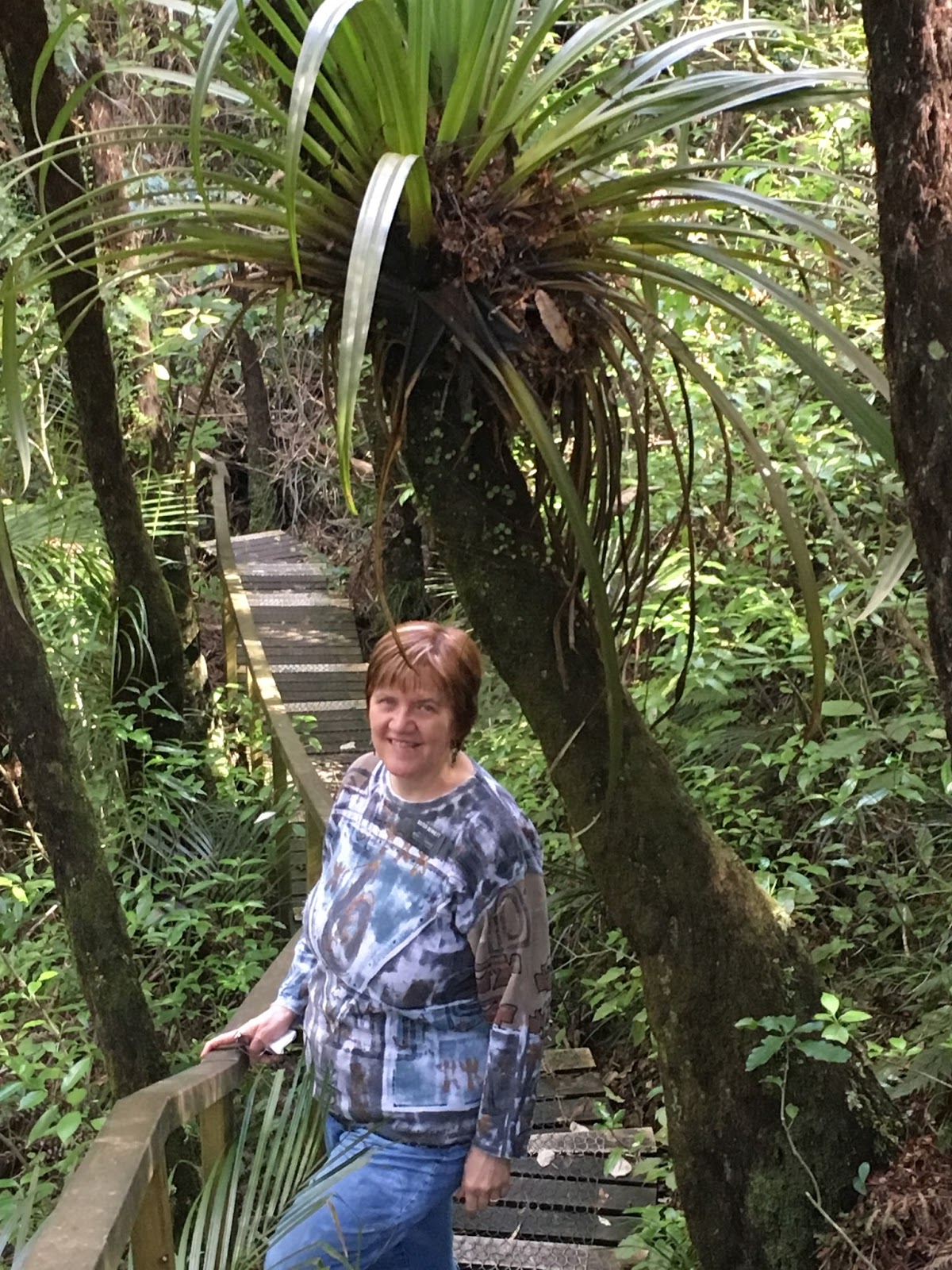


Hugging a kauri tree goodbye.  I will miss these mighty sentinels of the forest 

Rather than stay right in Whangarei, this time we opted to rent a homeaway bach a little further up so we could visit the beach at Matapouri on the Tutukaka Coast.  It wasn't very far out of our way and it let us appreciate more New Zealand Northland beauty.


Being in close proximity to the ocean is one of the things we will miss most of all.   We have truly learned to love being near the sea.

Tuesday evening we had dinner with our dear friends,  Bruce and Doreen Savill and Rosemary Waters.  These dear people will always hold a very special place in our hearts.  From our very first visit we just hit it off so we have always made a point to go see them whenever we are in the area.

 Rosemary is from Ireland and Bruce & Doreen are native Kiwis.  We've shared much laughter, some fine meals, music, and a friendship we will never forget.

The following afternoon we met with Brother Murray, the new High Council Adviser over temple work and family history for Whangarei Stake:  He's a great guy and we know he will do a fine job in his new responsibilities.

Then that evening we met with the Stake Presidency and high council in Whangarei one last time.  We talked about the Family History Workshops and discussed ways to engage people in the wards and branches in an ongoing way.  

President Poutu talked with us about the closeness of the Maori people to their ancestors and his desire to find ways to learn more about his histories of the people in the area.

The next day we had hoped to see a bit more of the area for our final farewell to the area, but it was pouring rain.  So we just packed up and hit the road.

On our way back we stopped at the FHC in Whangarei and had a great visit there with Sister Reti and Janice Gardner who staff the place and several others who had come in to work on their own family history.


We showed them how to use partner websites and talked about key skills such as standardizing data and merging duplicates in FamilySearch.  We listened to their concerns and heard about the good things that are happening there.   They were a delightful group.

Finally with that visit done we were ready to hit the road, back to Auckland.  The rain continued to pour all the way home. It felt like the sky was mourning with us as we said our goodbyes. My heart was heavy to leave the place I love so much. I felt humbled and grateful for all the many wonderful experiences we had in there over the past two years.  I was sad to acknowledge that I would most likely never see the place or the people again.  We have had so many blessings on this mission, it is hard to see this time coming to an end.

Friday, February 19, 2016

Family History in Bream Bay

We were invited to come up to Bream Bay Branch (in Whangarei Stake) to help with a scheduled Family History event.  They host a family history night on the third Friday of every month, which is fantastic, especially for a small branch.  (Their average church attendance fluctuates between 30-50 people).  While we have done stake trainings in Whangarei, this was our first time in Bream Bay. We were very impressed by the eagerness of the members to engage in Family History work.  

'Bream Bay' is loosely used as a collaboration of the three major towns that satellite the metropolitan area which are RuakakaOne Tree Point and Waipu. The physical bay itself geographically spreads from the mouth of Whangarei Harbour (Bream Head), 22 kilometers south, to the southernmost point of Waipu Cove (Bream Tail). The area also inhabits 3 native reserve islands, located just off the coast of Bream Bay: the Hen and Chickens Islands and Sail Rock Island.

The general area is made up of Ruakaka Beach, Ruakaka Township and Marsden Point. Other Bream Bay localities such as One Tree Point, Takahiwai and even Waipu are often included in general conversation regarding the area. (Latitude -35.8833, Longitude 174.4000)
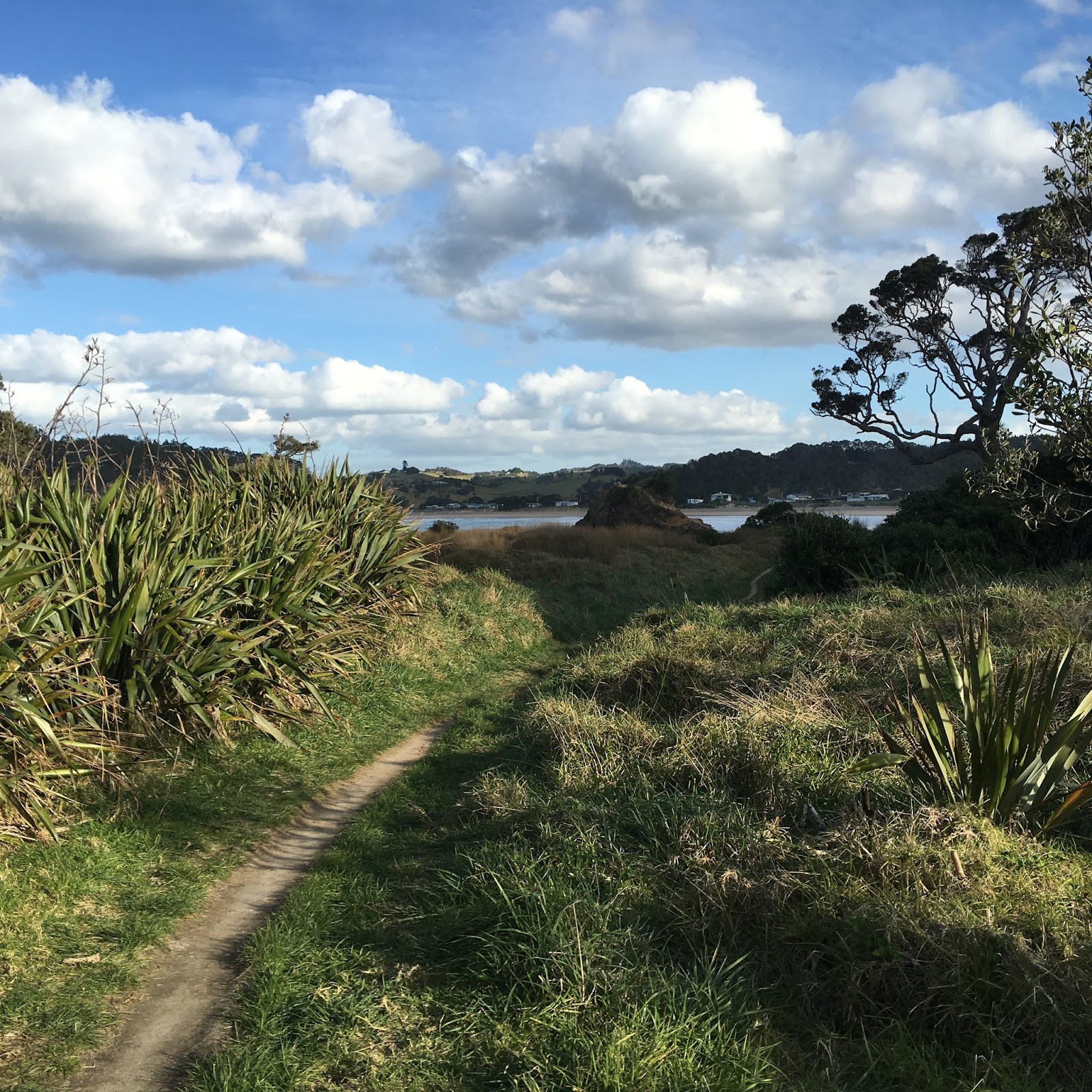
Ruakaka Beach, October 2005.
Ruakaka Beach lies near the mouth of the Ruakaka River which boasts a rare bird reserve and popular summer camp ground.  It is primarily a residential area made up of a mixture of permanent homes and beach shacks.
The Ruakaka Township was developed off the back of the Marsden Point Oil Refinery expansion in the 1980s where services were required to support the large influx of workers from all over the world involved in the project. A government requirement for a percentage of revenue invested in the project to be spent on the local community allowed for provision of services not common in communities this size (e.g. squash courts, sports grounds).
The Marsden Power Station Village was built to support the Marsden Power Stations (A & B) which have since been decommissioned. The area is now promoted as beachside living.

The Whangarei Stake is very dear to us.  Of course, we love working with the leaders and members where ever we go.  Still, we have had some particularly special times in the Northlands.  So we were excited to head back up that way again.


 The meeting we helped with went very well.  Everyone had a really good time.  President Ashcroft is a wonderful leader who most definitely understands the vision of this work.  His wife and daughter both serve as family history consultants.


The congregation rents a large home on One Tree Point Road.  They have converted the garage into their chapel and various rooms of the house serve for Primary, Relief Society, Youth, Sunday School and other needs.  They have done a wonderful job adapting the place to meet their purposes. Apparently the old meeting house they had was very close to the ocean, so much so that at high tide the car park would get flooded and small land crabs would scrabble across the floor of the church.  This place is much nicer, and was a comfortable gathering spot for all.


In a rural branch where many of the members live quite a distance from where they meet for church, it is often quite a challenge to get people to come out for evening meetings during the week.  Robert Phillips, who serves as Branch President from neighboring Wellsford Branch, and his wife came to help as they are both very active genealogists but have not yet been able to generate much interest among members in their area.


The Ashcrofts can certainly understand the struggle it is for many people to come out after a long day.   Sister Ashcroft teaches Early Morning Seminary and then works during the day teaching High School French.  So by the time 7:00 PM rolls around she is often feeling fairly spent.  But you could never tell that by her demeanor.  She was so kind and friendly, as if there was no place on earth she would rather be at that time than in this meeting.  Her enthusiasm for helping other find their ancestors was infectious.

We loved the buzz of engaged conversations as members shared stories with each other about their families.


Best of all was the joy expressed when members found particular ancestors in their family lines that they could submit to do proxy ordinances for in the temple.  


Our hearts were full throughout the evening as we felt the blessings flowing. Family History is so much more than just names and dates.  The love and joy that filled those rooms was tangible.   When we finally got back to the little bed and breakfast where we were staying we were tired, but so happy.  It truly is a privilege to be part of events like this. 

The beauty of the Northlands is undeniable.  Nevertheless, it is the spirit of the people that keeps up going back again and again.  


Friday, June 5, 2015

Return to the Northlands

We recently made another trip back up to the Northlands of New Zealand.  It was a lot of road time, but we accomplished all we set out to and enjoyed some special beauty on the way, so we felt good about the trip. 

We drove up to Kaitaia on Friday.  It's a long twisty road to get up there.  (190 miles / 306 kilometers)   As the crow flies it would not be that far, but with all the twists and turns and switchbacks through the bush around mountains, it takes almost four hours to drive it.

Looking at the map from afar it seems pretty simple.


But when I zoom in a bit I get a more realistic view of what the actual drive is like:


Let's just say it's a good thing neither one of us is prone to motion sickness.

On the way up we missed one turn we should have taken at about Kawakawa, so we ended up going the long way around, through Paihia.  We were familiar with the Bay of Islands area from our previous trip up there in April.  This time we were on a bit of a tight schedule and it was pretty rainy, so we didn't do any exploring - but it was still a pretty drive.


We are still struggling to learn how to say many of the place names we come across.  From road names to towns, they leave our tongues tied up in knots since nearly everywhere we go in the Northlands has Maori names. According to census figures, a little over half the population of Kaitaia are Maori, and that is very much evident when we are there. "
Archaelogical evidence shows the Far North was first settled by Polynesian ancestors of the Maori, about 900 years ago. Kaitaia has a long history of Maori occupation and the region still retains a strong Māori flavour today with many interesting structures and sites". (Kaitaia Portal)

The New Zealand Tourism Guide says:

"Today Maori people live throughout New Zealand, and many are actively involved with keeping their culture and language alive. Within any Maori community, the marae provides a focus for social, cultural and spiritual life. The term marae describes a communal 'plaza' area that includes a wharenui (meeting house) and wharekai (dining room).
Maori people define themselves by their iwi (tribe), hapu (sub-tribe), maunga (mountain) and awa (river). Whanau is the name given to family - the term embraces immediate family, in-laws and all those connected by blood ties.
In recent years, the introduction of Maori language nests (kohanga reo) has revived the Maori language. At kohanga reo, preschool children are encouraged to speak in Maori. Primary and secondary schools build on this early immersion by including Maori in the curriculum.
Traditional carvers also help to keep Maori culture alive by creating intricate works that pay respect to the past. Every piece carved tells a story, which can be read by those who know how. The shape of the heads, position of the body as well as the surface patterns work together to record and remember events."
We stayed at the Kauri Lodge Motel, which is very basic, no-frills sort of place.  But it is clean, the bed is comfortable, and like nearly all motels here they have a refrigerator/microwave/sink and cupboard full of dishes and utensils, so we were able to bring food to prepare rather than eat out.  

On Saturday morning we met with Sally Bills, the acting director of the Family History Center in Kaitaia.  (She is officially called as an assistant, but the actual director moved away some time ago.  They've never changed her title but that does not seem to be a big concern for Sally).  She is a delightful lady who we enjoyed very much.  We taught her how to use the snipping tool to create pedigree charts for leaders working on the 15-15 and showed her how to access the online version of the MyFamily book.  We discussed how the My Family 15 in 15 program has been going so far in her stake and gave some suggestions for how she encourage others to participate.  

Sally Bills - Kaikohe FHC 
As we were leaving Kaitaia we  stopped at a local farmer's market and enjoyed walking around looking at all the things that were offered there.


We bought a bag of fresh mandarin oranges and some bbq chicken on a stick and then got back on the road.  We initially planned to meet that afternoon with the FHC director in Kaikohe, but she had a family funeral to go to, so we rescheduled for Monday.

We hit the road again and headed back to Whangarei, a trip of about 110 miles.There we went back to the same farm-stay place where we were in April, "The Honey House" that we liked so much.  Again, the accommodations are very basic, but the setting is  quite lovely there.


On Sunday we attended the Hatea ward.   Both of us gave talks in Sacrament meeting and then we gave a presentation about the My Family 15 in 15 program to a combined Relief Society-Priesthood meeting.  It was very well received and we felt like it went well.   We enjoyed talking with the members and felt a lot of support.  The Whangarei Stake Presidency is very much engaged in this family history effort and is encouraging their members to get on board.  They arranged to have special meetings focusing on the My Family 15-15 goal in every ward.

Sunday evening we got together with friends we met last time we were in Whangarei.  Bruce and Doreen Savill are life long Kiwis and Rosemary Waters is an emigrant from Ireland.  They are not LDS, but the all have deep testimonies of Jesus Christ and they are the kindest people you could ever hope to meet.  Doreen prepared a lovely meal and we had a wonderful time visiting with them.  After dinner we all gathered around the piano to sing which was lots of fun.  We love these good people!


Then on Monday (1 June) we shifted over to a different place to stay so we could have Internet - The Birchgrove Cottage was a great spot for us, with a full kitchen and some nicer amenities like central heating, which we appreciated now that the weather has grown cooler. While it isn't quite as charming as the Greenfields (what we call "the Honey House") with it's farm setting and lovely artwork, in many ways it was more comfortable so for future visits we are more likely to stay there.


That day we headed back to Kaikohe for our rescheduled meeting with Cheryle Sadler, the FHC director. On the way up we did a brief stop at Lake Waro to stretch our legs and scope out the area.  We looked for a geocache that was supposed to be hidden there, but never did find it.  Perhaps with a bit more searching we would have figured it out, but we had a schedule to keep so once more we hit the road!  If we get up there sometime when we are not pressed for time we would like to go back for some more extended exploring.  It looked like a great spot for hiking or a picnic.

The Department of Conservation website had this to say about the place:
"The track through this 7.5-hectare reserve takes you through open grass land around spectacular limestone formations. The track follows the route of a historic horse tramline, built in about 1900.
The reserve is one of the most outstanding examples of a limestone landscape in Northland. Interpretation signs explain the geology of the karst landscape and aspects of the human history.
You can walk around the lake by continuing on a Council track to the Council car park making the entire walk about 2.2 km.
Since this special geological feature is so close to the highway, it is well worth a visit."


Once we got to the FHC in Kaikohe we had a good meeting with Cheryle.  We talked about ways that she could support the 15-15 goal in her area.  In addition to being family history center director, she is also ward primary president.  Because of that, she meets with her ward council.  She said she would be sure the council members there are all encouraged to meet the goal.

Cheryle Sadler


Monday night rather than hitting another restaurant since we had such a nice kitchen at the Birchgrove we just went to a local grocery store and got a few things to make supper there.  We relaxed putting together a jigsaw puzzle that was there in a closet with some games and got a good night's rest before having to head back to Auckland on Tuesday.


 On the way was stopped to make sandwiches on the road at Mangawhei Heads overlooking the beach. That's another lovely area we would like to explore further sometime when we have a bit more time.


All in all our trip to the Northlands was very successful.  We saw some lovely country and had productive meetings.  We accomplished all we set out to do.  We have come to develop a special love for this area.  As much as we enjoy seeing new places, it is kind of nice to keep going back to the same region where we can get familiar with the area and build relationship up over a period of time.