"Choose ye this day whom ye will serve....but as for me and my house, we well serve the Lord." Joshua 24:15
.
Sunday, January 11, 2015
The Youth of the Church
This past week the youth of the Taulanga Ward had an opportunity to join LDS young men and young women from all over the North Island of New Zealand and the Cook Islands to attend the For the Strength of Youth (FSY) conference held at Kings College campus in Otahuhu. The conference was a week long series of workshops and classes, along with social opportunities, all aimed at strengthening these young people's testimony of Jesus Christ and help them build strong commitment for living gospel standards.
Several of the youth bore their testimonies in Sacrament meeting today about the impact FSY had on them. The conviction and clarity with which they spoke was impressive. Truly, this is a special generation of young people, chosen to come forward at this time when the world is so filled with turmoil.
Taulanga Ward Primary
I love the spirit in the Taulanga Ward Primary! Initially I chose to go in there simply because the kids are taught in English while all the adult classes are conducted in Tongan. It was much easier to follow what was going on and feel like I could contribute when I could understand the language.
Once I got in there, however, I was so impressed by the spirit of the leaders and the children. The singing is absolutely amazing!! Even the very youngest kids know their Primary songs and belt them out strong.
I noticed a few differences here, such as shoes seem to be optional and the children sit on the floor during sharing / singing time. But other than that, these kids are like primary children all over the world. Some love to come the class. Some are less certain. Above all, what impressed me the most about the Taulanga Ward Primary was the love they all showed for each other. These kids clearly have been taught to love one another and to love the Savior. It is a real privilege to get to be with them.

Saturday, January 10, 2015
Our Day in Devonport
Now that the extended holidays of Christmas, Boxing Day and New Years are all over, we are back to work in the office. We have had lots to do and had a very full week filled with many responsibilities of our calling. So when Saturday rolled around, we were eager to kick up our heels and do a bit of exploring.
We got together with another Senior Mission couple, the Whiddens from Vancouver, BC.
They were very good company. Together we had a great time exploring Devonport.
According to Wikipedia:
Devonport is a harbourside suburb of Auckland, New Zealand. It is located on the North Shore, at the southern end of a peninsula that runs southeast from near Lake Pupuke in Takapuna, forming the northern side of the Waitemata Harbour. East of Devonport lies North Head, the northern promontory guarding the mouth of the harbour.

The village of Devonport is built around a prominent hill, Mt. Victoria, which is the remains of one on the eight volcanos in the area. You can see more about our volcanoes HERE.
We didn't take time to go up to the top of Mt. Victoria today, but enjoyed seeing it as a backdrop to the town and will probably take a drive up there the next time we visit. The views from up top are supposed to be pretty spectacular.
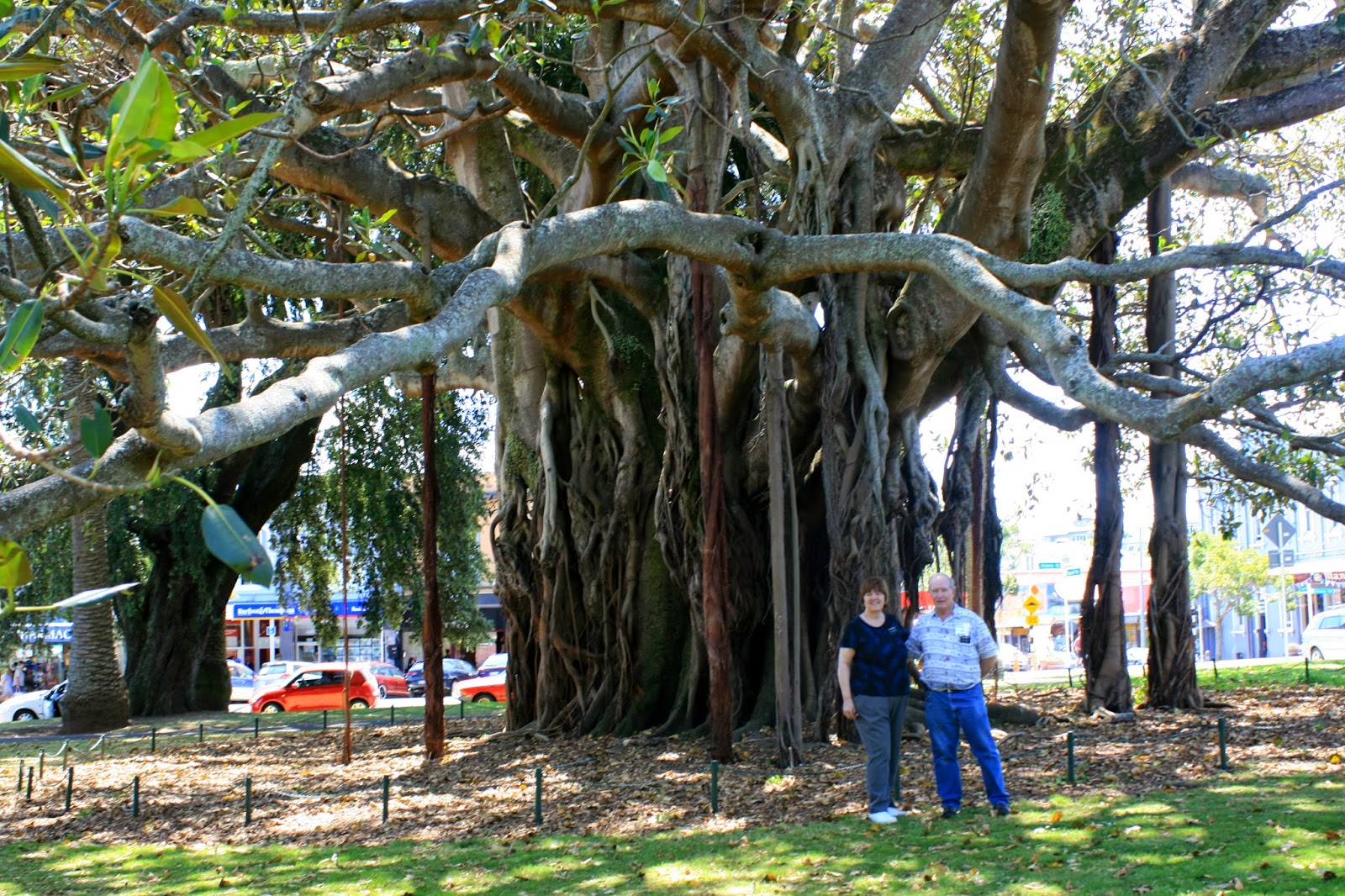
We found Davonport to be a charming area filled with historic buildings, colorful shops, abundant cafes, gardens, and amazing trees. My favorite tree was a giant Morton Bay Fig (Ficus macrophylla) that was planted in 1883.
Apparently these mighty trees must be pollinated by one specific kind of wasp (Pleistodontes froggatti). There are several different species of fig trees and each one must have it's own special brand of wasp to make it possible for the tree to propagate. It's a pretty amazing and complex symbiotic relationship which I learned more about over at Figweb
We had a lovely lunch at the Stone Oven and we wandered in and out of several shops.

I particularly enjoyed seeing the Flagstaff Gallery. (I was born in Flagstaff, Arizona so with a name like that, how could I pass it up?) They had great pieces, friendly staff, and just a really good vibe for discovering both established and up-and-coming New Zealand artists.
I could not agree more with this review posted over at yelp:
"What impressed me the most about Flagstaff was their very innovative wall drawer system at the back of the shop - there were all these massive sheets of fencing that would slide in and out of the wall, and they would all have pieces of artworks displayed on them (each fence belonged to a different artist). I thought it was a very clever use of the limited space in the gallery."
From the gallery website:
Flagstaff Gallery was established in Devonport in 1993 as the first dealer gallery on Auckland's North Shore. Now one of Auckland's leading dealers in contemporary New Zealand fine art, we occupy a spacious gallery that enables us to exhibit art and make it easy for clients to browse.
The gallery at 30 Victoria Road (just up the road from the original gallery) features custom-designed sliding racks which have expanded our display capacity to more than 1000 artworks.
Our aim is to provide a friendly, relaxed environment in which to make a wide variety of quality art accessible to all. Well-established and new artists contribute to our exhibition programme, which includes paintings, sculpture, and hand-worked prints.
I would heartily recommend this place to anyone who comes to Devonport. It's definitely worth a look. Some of the pieces on display were totally captivating, capturing the feel of New Zealand in a very powerful way.
There were a lot of cool old historic buildings but one that will bring me back for sure was the old church we saw just as we came into town. It is St. Franis de Sales Catholic Church.
According to the church's website, the parish was established in 1904, although there had been a worshiping community here for several years prior to this date.The original church building was a small wood
en structure which had been commissioned by Bishop Pompallier in 1866 as a mortuary chapel in Symonds Street, Auckland, and named for one of his patrons, François (de Sales); it was barged across the harbour and erected on the current site in 1893.
In 1919 a second and larger building, of Gothic Revival design, was erected over the old chapel, which was then dismantled and removed through the entrance.
What interested me most was the old cemetery next to the church.
I checked on Find-a-Grave and it seems those graves have not been added to that resource. I would love to take a day to go photograph each grave site and get them added to the website.
There was so much to see and do in Devonport. We just barely scratched the surface. I'm sure we will be back other times, as it's just a short drive from where we live.
All in all we really had a very fun day.
We got together with another Senior Mission couple, the Whiddens from Vancouver, BC.
They were very good company. Together we had a great time exploring Devonport.
According to Wikipedia:
Devonport is a harbourside suburb of Auckland, New Zealand. It is located on the North Shore, at the southern end of a peninsula that runs southeast from near Lake Pupuke in Takapuna, forming the northern side of the Waitemata Harbour. East of Devonport lies North Head, the northern promontory guarding the mouth of the harbour.

The village of Devonport is built around a prominent hill, Mt. Victoria, which is the remains of one on the eight volcanos in the area. You can see more about our volcanoes HERE.
We didn't take time to go up to the top of Mt. Victoria today, but enjoyed seeing it as a backdrop to the town and will probably take a drive up there the next time we visit. The views from up top are supposed to be pretty spectacular.
We found Davonport to be a charming area filled with historic buildings, colorful shops, abundant cafes, gardens, and amazing trees. My favorite tree was a giant Morton Bay Fig (Ficus macrophylla) that was planted in 1883.
Apparently these mighty trees must be pollinated by one specific kind of wasp (Pleistodontes froggatti). There are several different species of fig trees and each one must have it's own special brand of wasp to make it possible for the tree to propagate. It's a pretty amazing and complex symbiotic relationship which I learned more about over at Figweb
When I consider how that tiny little wasp about the size of an ant is absolutely necessary for this great and mighty tree to grow I think of the story of Alma, teaching his son Helaman about the importance of the record written on the plates of brass, said:
“By small and simple things are great things
brought to pass..." (Alma 37:6)
We had a lovely lunch at the Stone Oven and we wandered in and out of several shops.

I particularly enjoyed seeing the Flagstaff Gallery. (I was born in Flagstaff, Arizona so with a name like that, how could I pass it up?) They had great pieces, friendly staff, and just a really good vibe for discovering both established and up-and-coming New Zealand artists.
I could not agree more with this review posted over at yelp:
"What impressed me the most about Flagstaff was their very innovative wall drawer system at the back of the shop - there were all these massive sheets of fencing that would slide in and out of the wall, and they would all have pieces of artworks displayed on them (each fence belonged to a different artist). I thought it was a very clever use of the limited space in the gallery."
From the gallery website:
Flagstaff Gallery was established in Devonport in 1993 as the first dealer gallery on Auckland's North Shore. Now one of Auckland's leading dealers in contemporary New Zealand fine art, we occupy a spacious gallery that enables us to exhibit art and make it easy for clients to browse.
The gallery at 30 Victoria Road (just up the road from the original gallery) features custom-designed sliding racks which have expanded our display capacity to more than 1000 artworks.
Our aim is to provide a friendly, relaxed environment in which to make a wide variety of quality art accessible to all. Well-established and new artists contribute to our exhibition programme, which includes paintings, sculpture, and hand-worked prints.
I would heartily recommend this place to anyone who comes to Devonport. It's definitely worth a look. Some of the pieces on display were totally captivating, capturing the feel of New Zealand in a very powerful way.
There were a lot of cool old historic buildings but one that will bring me back for sure was the old church we saw just as we came into town. It is St. Franis de Sales Catholic Church.
According to the church's website, the parish was established in 1904, although there had been a worshiping community here for several years prior to this date.The original church building was a small wood
en structure which had been commissioned by Bishop Pompallier in 1866 as a mortuary chapel in Symonds Street, Auckland, and named for one of his patrons, François (de Sales); it was barged across the harbour and erected on the current site in 1893.In 1919 a second and larger building, of Gothic Revival design, was erected over the old chapel, which was then dismantled and removed through the entrance.
What interested me most was the old cemetery next to the church.
I checked on Find-a-Grave and it seems those graves have not been added to that resource. I would love to take a day to go photograph each grave site and get them added to the website.
There was so much to see and do in Devonport. We just barely scratched the surface. I'm sure we will be back other times, as it's just a short drive from where we live.
All in all we really had a very fun day.
Wednesday, January 7, 2015
Heading to The Rock
Things are ramping up in the Area Office as we move forward to implement the 2015 Area Presidency goals for family history. We have had some busy days. A big part of today was making travel plans for our first overseas trip. In just a little over a week we will be headed to the island nation of Niue.
I learned a few facts about the place over at Niueisland.com:
Niue is a large upraised coral atoll, and is a standalone land mass in the centre of a triangle of Polynesian islands made up of Tonga, Samoa and the Cook Islands. Located 2400km north east of New Zealand, on the eastern side of the international dateline.
The general formation of the island takes the shape of two terraces, the lower terrace being 28m above sea level and the upper terrace is about 69m above sea level. The island’s isolation and coral makeup creates an exciting rugged coastline and reef which provides intimate swimming coves as opposed to the typical long stretches of sandy beaches so predominant elsewhere in Polynesia. The whole island is dotted with a myriad of caves and sheltered rocky coves, some of which have yet to be explored. The Huvalu Rain forest is home to some amazing indigenous trees and has been designated as a Conservation Area to protect and conserve the islands primary rain forest and natural fauna and flora.
The reason we are going there is to support the members and leaders of the church in recording their family history information on FamilySearch.com Also, our Mission President wants us to connect with the young elders who are serving there to see if they need anything.
We are making arrangements to get a new computer sent to the Family History Library in Niue. When we go we will be sure it is set up properly and that the people there know how to access the program.
While we are there we hope to get to also get a chance to explore a bit so we can experience some of the beauty of this small, somewhat isolated Pacific island. I'm excited to be going and look forward to the experience.
Sunday, January 4, 2015
A Catch of a Different Sort
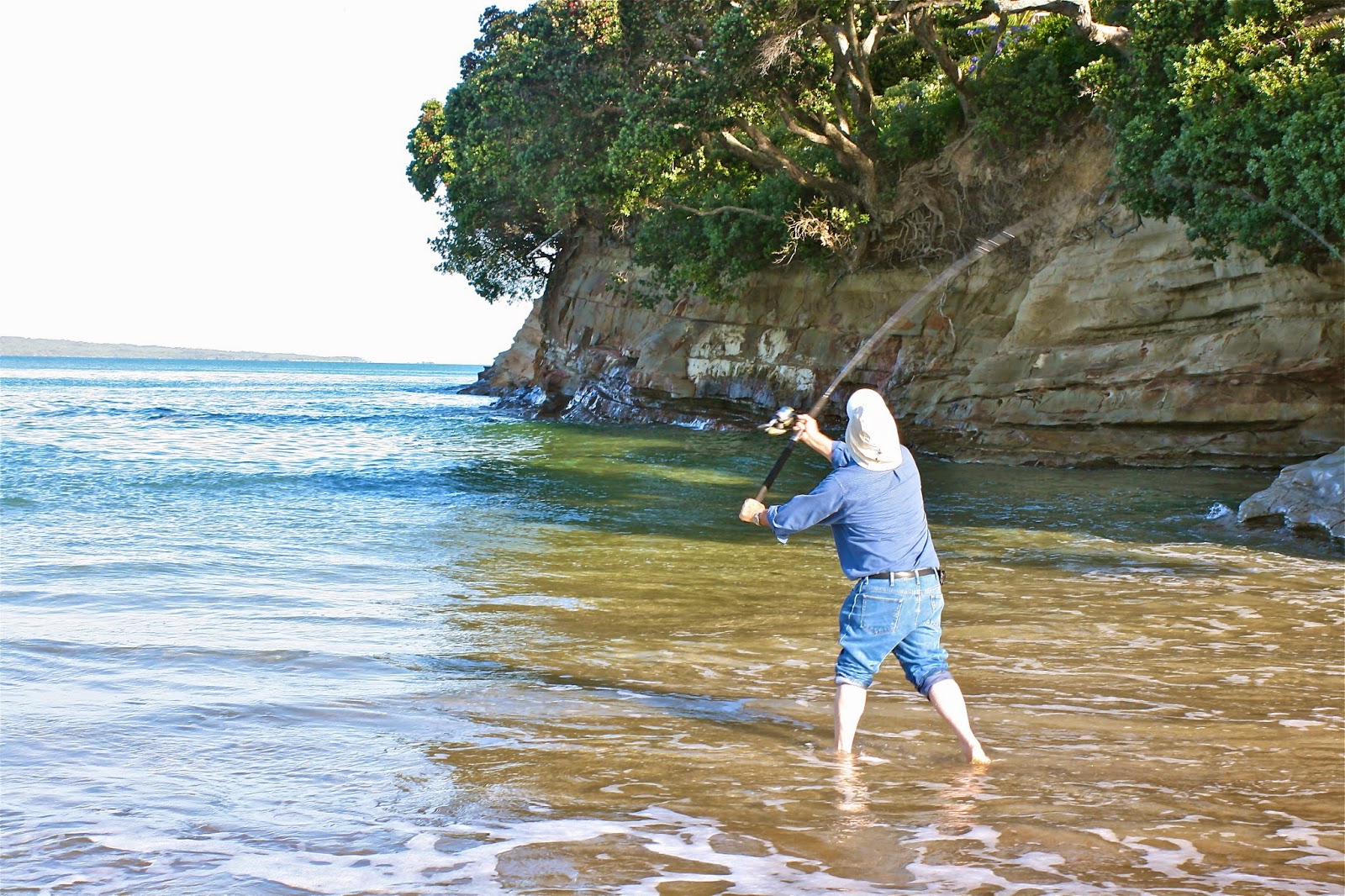
Last week Elder Bennett decided to try his hand at some fishing down by the cliffs at Takapuna Beach.
He had a few bites, but didn't hook into anything yet. Next time he will try a smaller hook and experiment with different kinds of bait.
What he DID catch was the avid interest of several young boys who were playing on the beach.
It was so fun watching him explain how the hook was set up and letting them touch the squid he was using for bait. They were enthralled.
So the only fish to be had that day was one I made in the sand, but we had a great time together and loved watching the sheer joy of all the children, families, dogs who were out enjoying the day.
Friday, January 2, 2015
Mission Geocaching
![]() |
| Who Gives A Fig 4 a Cache? S 36° 47.398 E 174° 45.733 |
We've been playing the game since 2006 and have found a couple hundred of them scattered all over the United States during our various travels. Now I have a whole new playground to go hunting in and I am quite excited about it.
I explained in more detail why I love geocaching over on one of my early blogs that is now archived. You can see that HERE if you care to.
In visiting with one of my fellow senior missionaries I tried to explain a bit about why geocaching is so fun. The question came up whether that was a suitable activity for a missionary to be doing. Not missing a beat, I explained there are plenty of spiritual lessons to be learned from the hide-and-seek game.
The whole point of the game of geocaching is seeking. As disciples of Jesus Christ, we seek after Him.
In the game, we follow the ever shifting coordinates as we move to guide us in the proper direction toward our goal. In living the gospel, we open our minds and hearts to be sensitive to the promptings of the Holy Ghost who is the testifier of all truth. He will direct us as to whether we are getting nearer or further from our goal of eternal life.
When we get to the find in a geocache game we record our "name" (generally a pseudonym) on the log to show we have been there.
In Exodus 20:24 it says: "An altar of earth thou shalt make unto me, and shalt sacrifice thereon thy burnt offerings, and thy peace offerings, thy sheep, and thine oxen: in all places where I record my name I will come unto thee, and I will bless thee. "
While it is the FIND that really matters, some of the geocache hides have little treasures in them. The rule of the game is that if you want to take one of the prizes out of the container, you must leave something behind. Many folks who play carry a stash of trade goods for making exchanges along the way. In our callings as missionaries we give much in the way of service, but we also gain so very much in the blessings we find along the way.
![]() |
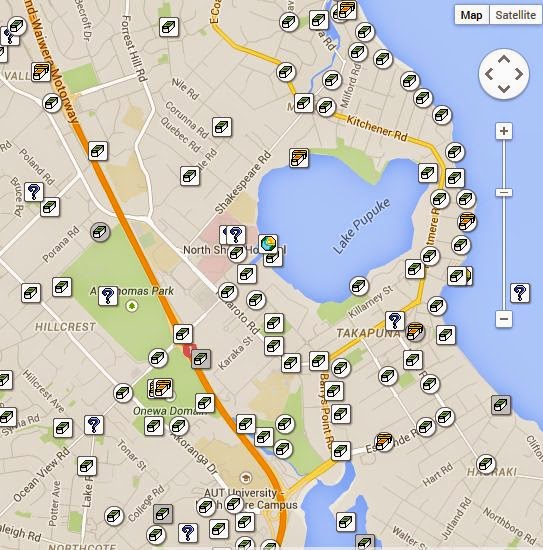
| Map of geocache hides in our area. |
Ok, so maybe that's a bit of a stretch. But my point is that playing this game is wholesome recreation, and it seems a great way to spend some of our free days.
There are LOTS of them to find pretty close to where we are. So we are off to have some adventures. The really great thing about geocaching is that it leads us to some truly beautiful spots we never would have found any other way.
Similarly, living our lives in accordance with the teachings of Jesus Christ leads us to a level of peace and joy that we never would have discovered by simply following the ways of the world.
Thursday, January 1, 2015
Happy New Year
![]() |
| New Year's Fireworks from Auckland's Sky Tower |
![]() |
| Students celebrate the forthcoming new year at Shenyang Agricultural University in Shenyang, Liaoning Province, ChinaPicture: Xinhua News Agency/REX |
The first time the new year was celebrated on January 1st was in Rome in 153 B.C. (In fact, the month of January did not even exist until around 700 B.C., when the second king of Rome, Numa Pontilius, added the months of January and February.) The new year was moved from March to January because that was the beginning of the civil year, the month that the two newly elected Roman consuls—the highest officials in the Roman republic—began their one-year tenure. But this new year date was not always strictly and widely observed, and the new year was still sometimes celebrated on March 1".
Probably the most famous tradition in the United States is the dropping of the New Year ball in Times Square, New York City, at 11:59 P.M. Thousands gather to watch the ball make its one-minute descent, arriving exactly at midnight. The tradition first began in 1907. The original ball was made of iron and wood; the current ball is made of Waterord Crystal, weighs 1,070 pounds, and is six feet in diameter (Bruner).
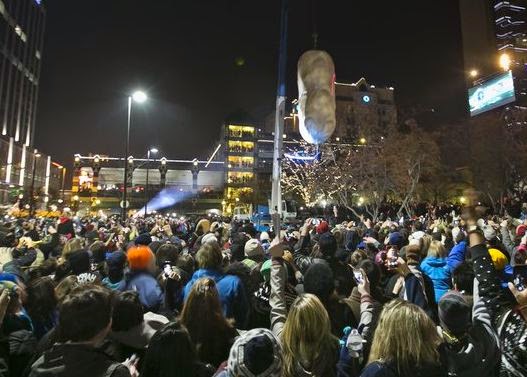
In my town of Boise, ID they drop a giant potato rather than a crystal ball:
![]() | |
| idahopotatodrop.com |
![]() |
| Photo: Enjoy Festivals |
I base my goals on the concepts taught as "Personal and Family Preparedness" which encourages people to become self-reliant in six different areas: (1) literacy and education; (2) career development, (3) financial and resource management, (4) home production and storage, (5) physical health, and (6) social-emotional and spiritual strength.
AREA 1: LITERACY & EDUCATION
The
STANDARD
The prepared
person reads, writes, and does basic mathematics; regularly studies the
scriptures and other good books; and uses local resources to teach these
skills and habits to all family members. Parents and children should
take advantage of public and other educational opportunities.
AREA 2: CAREER DEVELOPMENT

The STANDARD
Each head of a household should select a suitable vocation or profession
and pursue appropriate training. Each young person should receive
counsel to help him select a career that will satisfy family economic
needs and provide personal satisfaction.
AREA 3: FINANCIAL & RESOURCE MANAGEMENT
Each person establishes financial goals, pays tithes and offerings, avoids debt, pays obligations, uses family resources wisely, and saves during times of plenty for times of need.
AREA
4: HOME PRODUCTION & STORAGE
The
STANDARD
Each person or family produces as much as possible through gardening, sewing, and making household items. Each person and family learns techniques of home canning, freezing and drying foods and, where legally permitted, stores a one-year supply of food, clothing, and, if possible, fuel.
AREA 5: PHYSICAL HEALTH
The STANDARD
Each person obeys the Word of Wisdom and practices sound
principles of nutrition, physical fitness, weight control, immunization,
sanitation, mother and child health, accident prevention, dental health and
medical care. Members live in a healthy
and clean environment. In addition, each
member acquires appropriate skills in first aid safety, home nursing and food
selection and preparation.
AREA
6: Social / Emotional & Spiritual Strength
The
STANDARD
Each person builds spiritual strength to meet life's challenges with confidence and stability by learning to love God and communicate with Him in personal prayer; to love and serve his/her neighbor, and to love and respect her/himself through righteous living and self mastery. Social emotional and spiritual strength is increased by living the principles of the gospel.
For me, it's all about balance. At various times throughout my life I have done better in some areas and not so well in others. But as I continue to review each area and examine my personal alignment with the standards given, I can identify the specific things I can do to become more the person I was created to be.
Subscribe to:
Posts (Atom)