.

.

Saturday, February 28, 2015

Sauniatu

David Oman McKay (September 8, 1873 – January 18, 1970) was the ninth president of The Church of Jesus Christ of Latter-day Saints (LDS Church), serving from 1951 until his death. Ordained an apostle and member of the Quorum of the Twelve Apostles in 1906, McKay was a general authority for nearly 64 years  (Wikipedia)

David O. McKay was the leader of the Church when my parents converted in 1956 and is the first prophet I have memory of.

He is especially revered here on the island of Samoa


The following info comes from "The Work of Miracles in Samoa", a blog written by Debra Tolman, the wife of our current mission president here.

Early Samoan mission presidents found the Church thrived when members gathers together and could strengthen each other. Thus, several "gathering places" were established to bring strength to the Church, including Mapusaga (Tutuila), Viola (Savai'i) and Sauniatu (Upolu).  The Church began to develop churches, schools, and plantations in these villages, which remain as strongholds of the Church in Samoa today. Between 1900-1920, 23 branches were established.

Sauniatu

Through the years, many prophets and apostles have visited the Saints in Samoa. None were more memorable and significant to the Samoans than the visit of David O. McKay in 1921. While there, then Elder McKay visited Sauniatu, where the Saints had endured many persecutions, and pronounced marvelous blessings upon the faithful Samoan Saints. David O. McKay returned to Sauniatu in 1955 as President of the Church. There stands today a monument to memorialize those sacred events and Samoans' beloved Prophet.

President David O. McKay


Elder Bennett and I had an opportunity to visit Sauniatu recently.   According to an article from the Church Newes written by Jason Swenson in 2005  "Apostle David O. Mckay was so moved by his 1921 visit that he reportedly dubbed the village "the most beautiful place I have ever seen."  Swenson goes on to say "Often called "the Nauvoo of the Pacific," Sauniatu is revered by LDS Samoans as sacred ground. Originally established as a refuge by early island converts who were persecuted for their deep gospel faith, the village remains a place of Eden-like learning and worship."


While we were there we took a walk over to the waterfall.  Local kids were having a blast playing in the pools up at the top, but I admit it made me nervous to see some getting pretty close to the edge and look like they were toying with the possibility of jumping.  It's a LONG way down!


 Our good friend Brother Ah Hoy was part of the crew that built the staircase down to the bottom back in 1969.  Many feet have taken those stairs in the years since.  We met some fellow senior missionaries who were on their way down for a refreshing swim.


Today the campus at Sauniato houses the church, school, agricultural center and several residences.  There is also a church camp for the youth.


The road to get up here is a bit of an adventure.  It is so rough with potholes and ruts that we joke the way Samoans make butter is to take a car of cream with them whenever they go to Saniatu.  By the time they get to the top, it will be butter!

Still, is truly is a lovely spot.  I hope we get a chance to spend a bit more time there before we leave.

Tuesday, February 24, 2015

Faces of Samoa

As much as we are in awe of the scenery here, without a doubt it is the people who have captured our hearts.  We have felt so welcomed by their kindness.  This culture is one of deep sense of connection to community  and to God.   No matter where we have gone we have felt very safe, able to ask anyone we met how to say something or for directions of where to go.  I want to always remember the open generosity of spirit these people have shown us and that I can carry that with me throughout my days.

17 Feb 2015

Upolu Saleilua Stake
Stake President
Apineru Kofe

Elder Bennett teaching with interpreter

Sister Atalina Ah Hoy with RS Sisters from Saleilua Stake


Apia West Stake
Lily, the young girl in center, taught us all some things!
She is daughter of the FHC Director,Liutoga Faamausili, front right.
I hope I will always remember the feelings I had while teaching these people.


19 February 2015     Upolu Faleasi'u Stake
FHC Director Molimaufou Laulu with consultants from her stake


Larry and I with Area Family History Advisors, Brother and Sister Ah Hoy.
The love and kindness they showed to us on this trip was amazing.
They served as our guides, our interpreters, and became our eternal friends.

 20 February 2015

Upolu Nuumau Stake


FHC Consultants from Pesega Samoa Stake


21 February 2015  Upolu East Stake
Stake President Avauli


  22 February 2015 Upolu Aleisa Stake


24 February 2015

Upolu Tafuaupolo Stake

Upolu South Stake

Stake President Pasina Faiumu


26 February 2015 - Apia Samoa Stake

Stake RS President Rosemarie Vaa'ulu


Faces along the way


Soaking in God's Bathtub


One of the things I've truly missed since leaving the United States has been the opportunity to take a bath.  While I usually prefer showers for getting clean, a nice hot soak in a tub before going to bed at night is something I find very relaxing.  Ever since arriving in New Zealand last December, I have only had access to showers.  Even when we have stayed in hotels there have been no tubs.  It's not that big of a deal, but I have so longed for a good soak.

Today I got to soak till I was pruney. This morning Larry and I drove over the mountains to the other side of the island to deliver and set up a new printer for one of the family history centers.  On the way home, we found this sweet spot to stop for lunch and a bit of snorkeling. (We knew we were going to have some free time, so we brought our gear just in case.)   It was heavenly!

Just as we got out of the ocean the skies opened up and poured rain on us.  We were already wet, so this was just a sweet refresher to rinse the salt off.  I danced in the rain on the beach till I was giddy.  It was great.  It really poured!

We didn't have any appointments for the afternoon, so we just took our time on the way back, stopping to take in some views.  It was really the first relaxed time we have had since we arrived, so we enjoyed it thoroughly.  

For a while we were able to pick up a radio station from American Samoa with some classic rock 'n' roll to keep us company as we drove back across the mountains.   We talked and laughed and felt like we needed to pinch ourselves to be sure we weren't simply dreaming.

Samoa is truly a magical place.


Monday, February 23, 2015

Choosing Glory

Chris and Lili Anderson

We were blessed to hear a very special fireside this week with all the other senior missionaries serving here in Samoa.

Sister Tollman gave such a great description, I will quote from her blog.

"Chris and Lili Anderson  are both mental health specialists. Chris works in the missionary department of the Church counseling with mission presidents and missionaries. He helped pioneer Critical Incident Stress Response services and training as a part of LDS Family Services. He led response teams to several incidents, including the Columbine High School shootings, the World Trade Center attack, several hurricanes, the Indonesia tsunami, and the Haiti earthquake.

After almost 20 years of being a full-time homemaker, Lili returned to school. She holds a Master's degree in Social Work and a PhD in Marriage, Family and Human Development at BYU. Lili has a private practice and is the president of The Association of Mormon Counselors and Psychotherapists. She also serves on two public affairs committees for the Church. When she has time, she writes books.

Lili has an incredible way of looking at the Gospel and applying it to our mortal experiences. She has authored a book entitled "Choosing Glory."

Lili shared with us her insights regarding Doctrine and Covenants 88:22-24. Every kingdom in God's glory is governed by law. If we want to live in those realms, we must learn to live those laws. She taught our missionaries that we need to live a Terrestrial life now. This is a life where the natural man is harnessed, and we have self-control and delayed gratification. This kind of living brings external peace and presence of the Spirit. This includes doing the right thing at the right time. It means being diligent--getting up, falling down, and getting up again. If we obey basic commandments and live a terrestrial life, we live a safer life. When we live this kind of a life, we can seek God's sanctifying power and begin to live a Celestial life, which is a life of Christ-like being. Here we feel the right things; our hearts are completely aligned with God. 

She helped us understand that the world is becoming more and more Telestial. Our world is becoming increasingly dark and evil. If we want peace in our lives we have to be "more different" than the world. In times past, it was easy to help our children learn about goodness because most of the world was still Terrestrial. As the world deteriorates, it will become necessary to be more different. We surely will become a peculiar people. Lili quoted Elder Marvin J. Ashton, "There is nothing worth having that the Gospel will deny you."

There is so much more! We have been truly blessed by their visit. Learning from them has been a life-changing and mission-changing experience for us and our missionaries. Now, go get her book and learn for yourself!."

I very much enjoyed this fireside.   I keep thinking about what she said about how we can't jump from telestial straight to celestial.  We need to develop all we can to live in a terrestial way so we will be prepared to be celestial.  

She had a great way of using examples and making analogies that just made sense to me. When I get a chance, I want to get her book and read it.   Love opportunities like this to learn from top notch people in the gospel!


This is what is says about her book Choosing Glory over at Amazon.com

Choosing Glory considers the doctrine of celestial, terrestrial and telestial realms, suggesting that here on earth we deal with all three kinds of individuals, behaviors, institutions, and ways of life. Dr. Anderson applies a three realm perspective to daily choices, dating, marriage, parenting, stress and progression. She offers concrete tools to help us find safety from telestial elements that threaten our peace and reminds us that we were meant for more than a good terrestrial life. This book invites us to recognize that every day we are in fact choosing glory.

Samoan fale


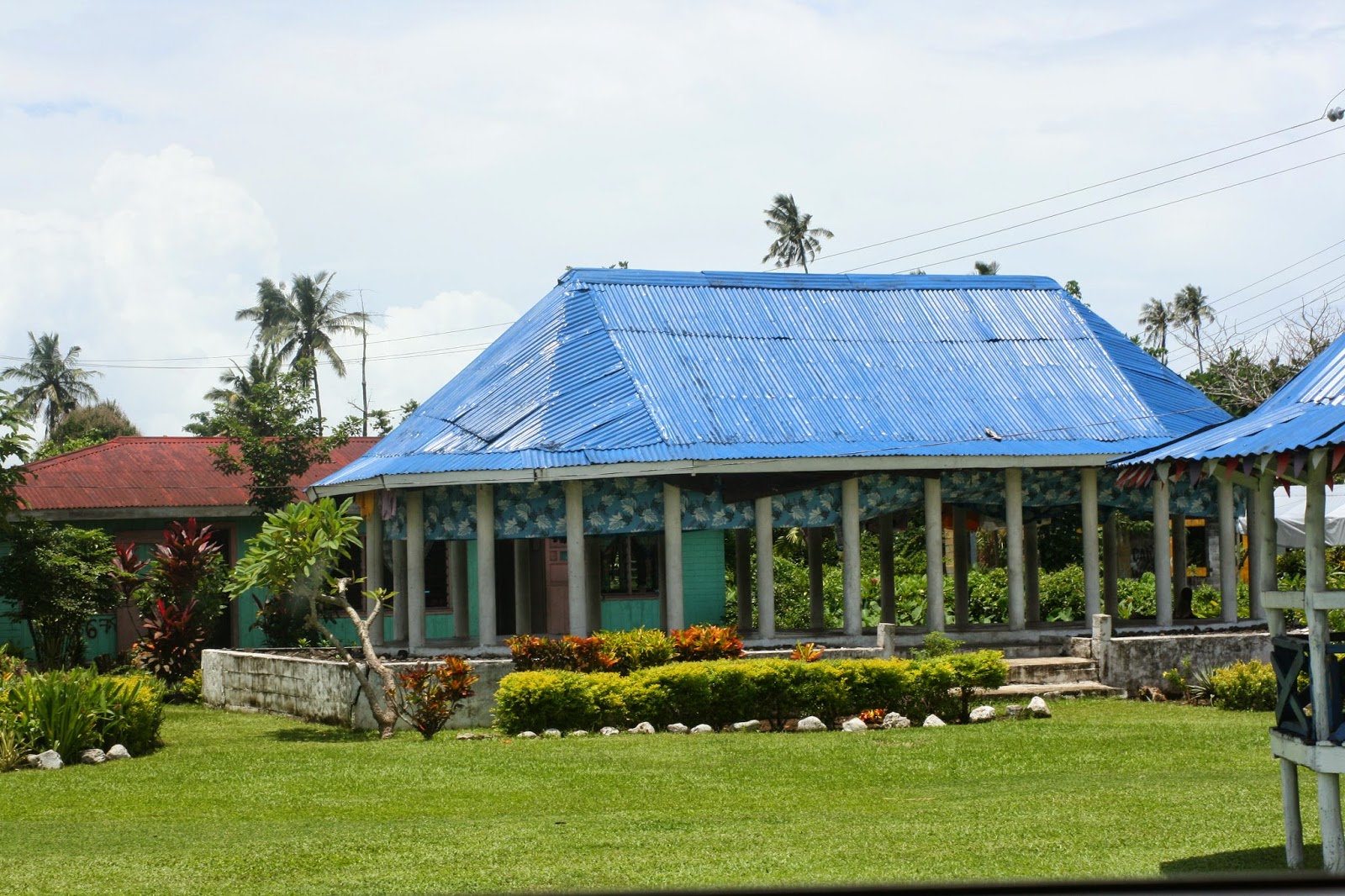
 The Samoan fale (pronounced "fah-lay") is one of the most common sights we see on this island.  Traditionally, a fale was round and had a thatched roof.  In more modern times they are more likely to have other types of roof construction--sometimes sheets of plywood and sometimes sheets of corrugated iron.  Many of the old fales were destroyed by storms.   There are places on the island where near every building that was once standing is now gone, wiped out by cyclones or tsunami. In other areas storm damaged buildings are evident.  Some have been abandoned, left to return to raw jungle, or "the bush" as they call it here.  Other structures are being reclaimed with more sturdy materials in hope for greater security amid the fickle elements of this land. Still, the fale remains a significant part of Samoan life.
Traditional Fale photo from Unesco Report at http://unesdoc.unesco.org/images/0013/001398/139897eo.pdf

While some fales built today are still round,  we have seen plenty that are rectangle rather than built on a circle.  In recent times it seems there has been a lot more variation in how they look or how they are made.  Some of the fales are quite modest and some are more fancy.  They come in every color of the rainbow, some wildly decorated in hues of magenta or mustard, lavender or peacock green, bright yellow or blue (or any combination of the above).   Others are more conservative, painted a solid white or tan or deep brown.  But everywhere we go we notice the fales and wonder about what it would be like to spend a significant part of one's life in a house without any walls.

In the United States, where I come from, many people spend a great deal of money, time and energy on choosing how to decorate their homes.   They select artwork, window treatments, furnishings to reflect their personal tastes and social status.  They pour over magazines and search Internet sites to get ideas about the latest fashion for the well appointed home.

  How would my relationships with others be if we all spent our time together in open houses with no pictures, no furniture, no drapes...just woven mats to cover the floor?    

The climate where I live back in Boise, Idaho would not be conducive to that sort of  living.  Also my American sensibilities would go bonkers without a higher level of privacy.  Nevertheless, when I get back from this mission I think I will think long and hard before I fill my home up with STUFF again.  I will never be as minimalist as a Samoan fale seems to my western eyes.   Still, I cannot help but think there are some lesson to be learned from my time among these people and days spent visiting sitting on the floor of a fale.


Sunday, February 22, 2015

When the Goats Die


After my last post considering how Robert Louis Stevenson did much of his amazing writing as a result of being bed-bound with serious illness, I saw a story which comes from Meridian Magazine by Mark Albright on November 23, 2014.   

The story tells of a young man named John from Mozambique who faced terrible opposition when his family's goats died from some disease.  His family depended on those goats for their livelihood.  As a result of this set back, which appeared very much like a "disaster" to the family, young John set out for the city to find some other way to support himself.  

The article skillfully tells the story how a series of events led to John getting an education and becoming a "man of importance" in his community.    John's son, David, grew up with opportunities that never would have come his way if John were still a goat herder in Mozambique.

David earned an important scholarship which led to a government job in the USA.  Along the way he was introduced to the gospel of Jesus Christ and is today raising a strong family in the Church and serving in his community.  What would David's life be like had his father's family had fine fat goats instead of adversity?   What if the goats had not died?

Adversity is something we all must face as a consequence of living in a fallen, mortal world.  We know that ultimately our lives can be blessed by these experiences.  Still, none of us eagerly look forward to life's challenges and tough spots.  
Right now I am itching all over from bug bites - something that is generally just annoying.  However in Samoa, getting bitten by mosquitoes can be dangerous.  There are some serious diseases, like Dengue Fever and Chikengunya which are major health concerns in this country that are transmitted by insect bites.  There is no vaccination to prevent these illnesses and no real treatment if I get it.   I have used strong insect repellent and covered up as much as I can when I go outdoors.  Still - I continue to get bitten by bugs.   

I am hoping and praying that I stay healthy.  I must admit, I have a fair amount of fear about these nasty fevers I could contract that bring with them unrelenting pain in the joints, pounding headaches and overall weakness and malaise.  Sounds pretty miserable if you ask me.

I hope I'm not finding all these inspirational stories about adversity right now to prepare me for an adversity about to happen in my own life.

But the reality is, even if I were not to get a single bug bite and could be guaranteed not to get sick at this time - adversity IS a part of life and we will all have difficulties, pain and opposition.  It is part of the plan.

So instead of seeing these stories as a warning omen of pain to come, I will take them as a reminder that sometimes our blessings do not come wrapped up in pretty packages.  Sometimes they come looking like disaster.  Sometimes our goats will die.

Thank you to Mark Albright for sharing this story.  I will definitely be looking for more of his writing. 
"Like the mortal life of which they are a part, adversities are temporary.  What is permanent is what we become by the way we react to them."  Dallin H Oaks, Adversity, Ensign, July 1998